Creatine 101: How it Works & What to Expect
Supplements have long been a hot topic in the fitness industry with the rise of social media giving people a platform to market all kinds of detox teas, testosterone boosters, and other useless products. For anyone new to the gym, it can be tough to filter through all the noise and pick which supplements actually work.
The first time I learned about creatine was in 2009. I asked the biggest dude at the gym what he was taking and one of the things he recommended was creatine. Ever since then, I’ve been using it to make strength and muscle gains. It’s the most effective supplement ever created, and in my opinion, one of just a handful that are actually worth buying.
If your goal is to improve your performance in the gym, build muscle, and get stronger, keep reading to see if creatine is right for you.
Note: I’m not an expert and I don’t have a degree in this stuff. If you want to read expert opinions, here’s a summary about creatine supplementation and exercise from the International Society of Sports Nutrition. For what it’s worth, I have a personal training certification and years of experience through trial and error. But at the end of the day, I’m just a gym-bro, so don’t take anything I say (or anything you read on the internet) as absolute truth.
Creatine is not a magic pill, or powder
Before we dive in, let me just say that creatine enhances your performance but it’s not a “performance enhancing drug”, like steroids are. I haven’t tried steroids, SARMS, or anything else like that (yet), so I don’t really know what I’m talking about when it comes to that stuff.
Contents
ToggleBut still, I’ve done a fair amount of research on PED’s and I can tell you that creatine does not compare. Not even close. When it comes to building muscle, strength, and transforming your physique, nothing compares to the real thing.
I know this isn’t breaking news to a lot of you but for those who don’t know, keep your expectations in check.
Creatine’s good, but it’s not that good. Let’s be real, nothing you can buy over the counter is that good. Except the original Jack3d, this stuff was wild!
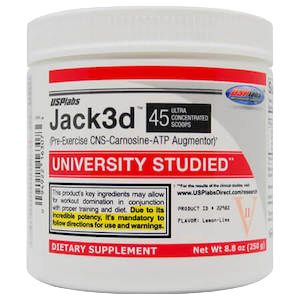
(The only reason I went to the gym)
Case in point, they took it off the shelves once they figured out how dangerous – I mean – how good it was. Dangerously good. For us natty lifters, our options are limited despite what the supplement industry tries to sell you on. Creatine’s pretty much all we got so might as well appreciate and learn more about it.
What is creatine and how does it work?
Creatine monohydrate is the most widely researched supplement on the market. It’s legal to use at any level of competition and has been clinically proven to help athletes perform better.
When you take creatine, it gets stored in your muscles and used as energy when needed, specifically for quick bursts during high intensity exercises. Lifting weights is a perfect example of this.
The main source of energy for your muscles is ATP, or adenosine triphosphate. When your muscles contract, ATP gets used as energy and turns into ADP, or adenosine diphosphate. The creatine helps turn the ADP back into ATP, and this cycle continues giving your muscles more energy from ATP.
Creatine helps build muscle, strength, and explosive power, but it doesn’t help with long distance or aerobic exercise, like running a mile. This is because endurance activities draw their energy from a different source, not from ATP.
You can get small amounts of creatine from eating meat and fish, but you’d have to eat a disgusting amount to get a good dose of it. Something crazy like five to ten pounds of steak every day.
So unless you’re a T-rex, might be easier if you just took a spoonful of powder.
So unless you’re a T-rex, might be easier if you just took a spoonful of powder.

What kind of creatine should you take?
I’ve always gone with the original, creatine monohydrate. It’s backed by the most research and is the least expensive kind.
The one I use is only 25 bucks and lasts me six months. That’s a great value compared to other supplements out there. If you’re anything like me, your tub of preworkout doesn’t last anywhere close to six months!
Some people say creatine monohydrate causes stomach issues and they claim that switching to a different form like Creatine HCL fixes the problem. That could be true, so it’s up to you to find whichever works best for your body.
Either way, I recommend at least starting with creatine monohydrate before switching to something else. If you ask me, I think the other forms of creatine are unnecessary and simply a way for supplement companies to market new products to consumers. But that’s just me, some people like variety.
How to use creatine monohydrate
To start, it’s recommended that you go through a loading phase during which you take 20 grams per day for the first seven days. It’s a good idea to split the 20 grams into smaller servings throughout the day rather than taking it all at once.
For example:
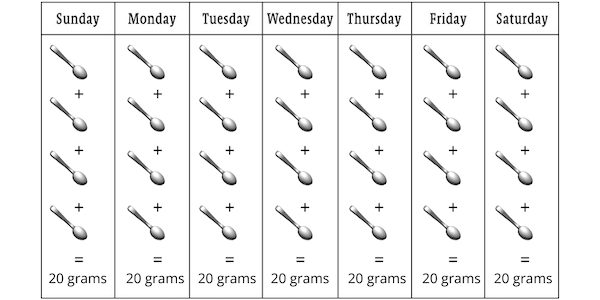
One rounded teaspoon of creatine monohydrate is 5 grams
After the loading week, drop down to a dose of three to five grams per day, even on the days you don’t train. Yes, that means take it every day.
One of the effects of creatine is your muscles will hold onto water, therefore you need to drink a lot of water to get the best results. Don’t overdo it, but you should be drinking a gallon or more every day.
It’s a good idea to take your creatine with food whenever possible. There’s evidence that shows the body retains more creatine when taken with carbs and protein. This is because the insulin response from eating food helps to shuttle the nutrients and creatine throughout the body.
Likewise, I prefer taking it after my workout because that’s when my muscles are primed for protein synthesis. I know that sounds like bro-science, but the research shows that consuming creatine post-workout is better than pre-workout when it comes to body composition and strength.
Benefits you can expect from using creatine
Now the fun part – what are the benefits you can expect from using creatine?
Better gym performance
The main thing is that it helps you perform better during your workouts, plain and simple.
- You can train with more volume. In other words, you can do more reps & more sets before getting tired. Because you’re doing more work, your body is forced to grow so it can handle the increased work load.
- Your strength goes up. I’m not a powerlifter but the weights definitely feel lighter when I’m on creatine. Strength gains are more noticeable at the start of your workout when you’re still fresh.
- You get a much better pump that lasts longer. I’ve had people come up to me in the gym asking why I look bigger every time they see me. I know that bodybuilding is just an illusion and there are a number of different factors in getting a crazy pump, but whenever I start a creatine cycle, people think I started a steroid cycle.
To give you an idea of how good it works, let’s say that you can bench 100 pound dumbbells for 10 reps on your first set. That’s the most you can do before reaching failure. After your workout, you begin your creatine loading phase, and you do another chest workout four days later. All else being equal, you could probably get 13 reps on your first set with the same 100 pound dumbbells.
That might not seem like a lot but keep in mind that’s just your first set, and only after four days of taking it! That’s pretty big if you ask me. Of course your strength doesn’t just keep increasing like that every time but that’s how quickly it starts to work.
My personal experience is not a scientific study on the benefits of creatine, but there’s no doubt that it helps me to perform better during my workouts. Here’s a study that shows increased performance and muscle gains in subjects who used creatine.
Increased muscle mass
Even when you’re not in the gym with a gnarly pump, you’ll notice that your muscles look bigger than usual. This is because creatine helps your muscles hold onto more water and as a result you’ll probably gain a few extra pounds from water retention. So if your goal is to gain some mass, it’s a no brainer to be using creatine for this reason.
But even if your goal is to lose weight and get lean, you can still take creatine to help you train harder while in a calorie deficit. In my opinion, unless you’re trying to get peeled for a bodybuilding competition, the performance gains will outweigh the potential downside of holding onto water.
Potential drawbacks and negative side effects
Despite the number of benefits you can expect from jumping on creatine, it’s not all fun and games. You know what they say – if you wanna play, you gotta pay. So what are some downsides to consider before getting started?
As I said earlier, you need to drink a lot of water. That means you’ll be going to the bathroom a lot. At least once every hour. And if you drink close to bedtime, you’ll be waking up in the middle of the night to go.
Also, I find that it can cause muscle cramps, especially after leg day. This is based on my own experience, as there’s no solid evidence that supports this. Make sure you stay hydrated, build a good foam-rolling and stretching routine, and get enough salt in your diet.
Some people say that creatine causes stomach problems too. If this happens, try adjusting your water intake because you might be drinking too much water, or not enough. I know that’s not exactly the gem of wisdom you were hoping for, but if you decide to take creatine, it’s up to you to find what works for your body.
One study from 2009 shows a potential link between creatine use and hair loss in men. This study found that subjects who used creatine showed increased levels of DHT, or dihydrotestosterone, which can worsen hair loss for those who are prone to it. It might be worth taking a closer look at this because the evidence isn’t conclusive. Here’s a more recent, ongoing study about the effects of creatine monohydrate on hair loss.
People with kidney disease, liver disease, or diabetes should talk to their doctor before using creatine.
One last thing I should mention is that whenever you decide to stop taking creatine, you will fall back to your baseline of performance before you started taking it. In other words, you won’t lose all the progress you made, but you will lose some. After you jump off creatine, it’ll be like you never took anything at all. Sounds discouraging I know, but that’s why you should consider staying on it long term if you decide to start.
Conclusion
Studies show that creatine is safe to use, but that doesn’t mean everyone should use it. It’s a good idea to do some research before putting a new substance in your body. I know it’s fun to get swole but your health is the most important thing.
If you want to get bigger and stronger while staying natural, creatine might be the answer for you. But before you hightail it to the supplement shop, remember that these are called supplements for a reason. They’re meant to supplement your program, not act as a substitute.
One thing I’ve noticed over the years is that a lot of guys who are new to the gym view supplements as the answer. Like it’s gonna be the difference maker. Creatine can help you reach your goals, but as long as you make supplements the foundation of your program, you won’t be at your best.
Focus on your nutrition, training, and recovery. The swole-y trinity. Build consistent routines in these areas first, then you should use creatine to level up. Keep your habits in check, be patient, and the gains will come!